
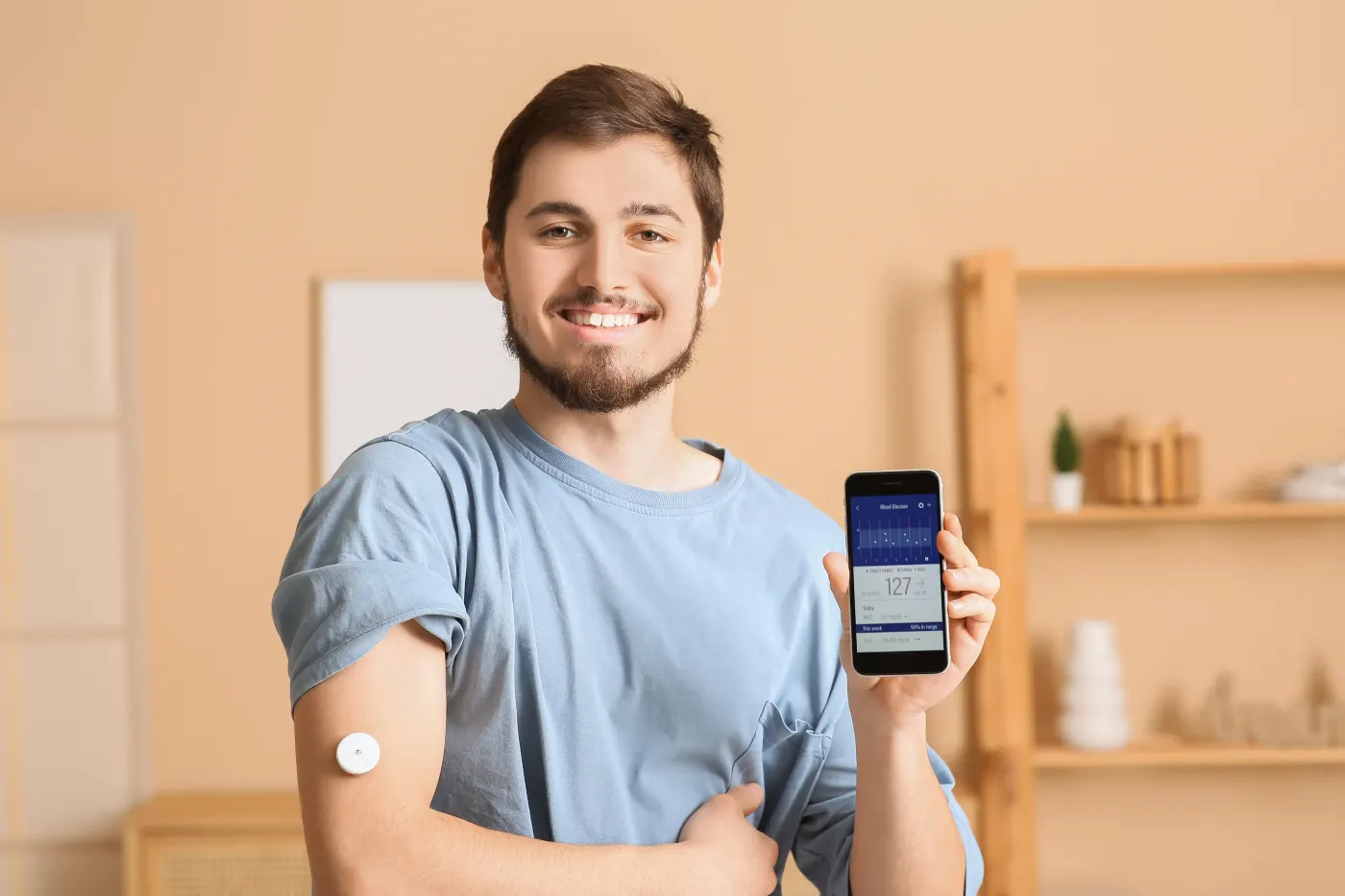
Continuous glucose monitoring can turn glucose from a handful of isolated measurements into a picture of what is happening throughout the day. For many people with type 2 diabetes, that can make patterns easier to see: what tends to happen overnight, after certain meals, during activity, or at particular times of day.
A continuous glucose monitor, or CGM, uses a small sensor to measure glucose in the fluid between cells and sends or stores readings throughout the day. That is different from a traditional finger-stick measurement, which tells you your glucose at one particular moment. Because interstitial glucose can lag behind blood glucose when levels are changing rapidly, CGM numbers should always be interpreted in context.1
Diabetes technology is becoming relevant to a wider range of people. The American Diabetes Association's 2026 Standards of Care recommend CGM for people with diabetes using insulin, for people using non-insulin therapies that can cause hypoglycemia, and in other situations where CGM helps with management. The ADA also emphasizes that technology should be selected according to each person's needs, circumstances, preferences, and ability to use it safely.1
What a CGM shows that one glucose reading cannot
Think of a finger-stick reading as a photograph and a CGM report as a short video. A single number may tell you that your glucose is 8.5 mmol/L, or about 153 mg/dL, at this moment. A CGM can also help show whether glucose is stable, rising, falling, or repeatedly following a similar pattern.
Those patterns can make more useful questions possible. Does glucose often rise after breakfast but not after lunch? Does an evening walk appear to change the shape of the overnight curve? Are lows occurring at a consistent time? Does a pattern appear only on workdays?
The goal is not to judge every number as “good” or “bad.” The value of CGM is often in seeing repeated trends and using them as information.
Evidence in type 2 diabetes is continuing to develop. A 2026 systematic review and meta-analysis of 25 randomized trials involving adults who were not receiving intensive insulin therapy found that CGM was associated, on average, with a modest reduction in A1C and greater time in the target glucose range. The authors rated the certainty of evidence as moderate and emphasized that effects differed across populations and outcomes.2 A separate 2026 randomized trial in adults with type 2 diabetes using basal insulin plus contemporary therapies found improved glycemic control with real-time CGM compared with self-monitoring of blood glucose.3
Start with patterns—not perfection
Receiving hundreds of glucose readings can be empowering, but it can also create information overload. A practical first step is to look for patterns over several days rather than reacting to every rise or fall.
Begin with overnight glucose. Is it relatively steady, or are there repeated rises or lows? Next, look at meals. Instead of focusing on one unusually high result, ask whether a similar response occurs after the same type or timing of meal on several occasions. Then consider physical activity, medication timing, illness, sleep, stress, or other factors that may have changed.
A CGM reading is also not infallible. The ADA notes that sensor glucose can lag when glucose changes quickly and that people using CGM should have access to blood glucose monitoring for situations in which a sensor result does not match how they feel or when confirmation is otherwise needed.1 Follow the instructions for your specific CGM system and the plan provided by your health-care team.
Turn glucose data into better questions
Instead of asking, “Why was my glucose high on Tuesday?” try asking:
- “What pattern do we see after breakfast across the last two weeks?”
- “Are these overnight changes important enough to discuss?”
- “Could the timing or composition of my meals be contributing to this repeated pattern?”
- “What should I do when my sensor reading does not match my symptoms?”
- “Which CGM metric should I focus on first?”
Those questions move the conversation away from chasing individual numbers and toward shared decision-making.
Standardized CGM reports can support that process. The ADA's 2026 guidance recommends standardized reports, including a concise summary view, so glucose patterns can be reviewed consistently by people with diabetes and their care teams.1
Use technology as a tool, not a scorecard
Diabetes management already involves enough daily decisions. CGM should make those decisions more understandable—not turn every meal, workout, or stressful day into a test you have “passed” or “failed.”
Your glucose targets may differ from someone else's based on your medications, age, health conditions, risk of hypoglycemia, and personal priorities. That is why changes to medication or treatment should be made with an appropriate health-care professional rather than from a general article or a single sensor pattern.
The best use of CGM is often simple: notice patterns, ask better questions, make appropriate changes with your care team, and then see what happens over time.
This article is for general education and is not a substitute for individualized medical advice, diagnosis, or treatment.